

Driven by the ongoing technological revolution, Artificial Intelligence (AI) and the third-generation Internet (Web3) are moving from independent development to deep integration. When AI's intelligent decision-making capabilities meet Web3's decentralized and user-sovereign characteristics, a revolution in the future form of the Internet is quietly brewing. Is this integration merely a simple superposition of technological concepts, or is it the key to unlocking the next generation of Internet revolution?
AI Infuses Web3 with Intelligence
The core of Web3 is decentralization and user sovereignty, but it still faces challenges in efficiency, security, and user experience. The addition of AI can significantly compensate for these shortcomings. First, AI can enhance security by analyzing on-chain data, monitoring abnormal transaction behavior in real time, and predicting and preventing potential attacks. Second, AI can empower smart contracts, making them more "intelligent," dynamically adjusting execution logic based on complex external data and pre-set models. Furthermore, AI can significantly improve the user experience of decentralized applications (dApps) by lowering the entry barrier for ordinary users through personalized recommendations, intelligent data analysis, and natural language interaction. In the governance of Decentralized Autonomous Organizations (DAOs), AI can also assist in proposal analysis, vote prediction, and resource optimization, improving the organization's decision-making efficiency and scientific rigor.
Introduction to Artificial Intelligence and Web3
The Rise of Artificial Intelligence
Artificial intelligence refers to technologies that mimic human intelligence and are widely applied in data analysis, automated decision-making, natural language processing, and many other fields. Through learning and analyzing massive amounts of data, AI can achieve efficient functions such as prediction and optimization, becoming an important component of modern technology.
The Concept and Development of Web3
Web3 represents a decentralized internet architecture based on blockchain technology, emphasizing user sovereignty, data privacy, and decentralized control. Unlike traditional Web2 platforms, Web3 empowers users to control their own data, eliminating dependence on centralized platforms and aiming to create a more open and transparent internet.
The Collaboration of Artificial Intelligence and Web3
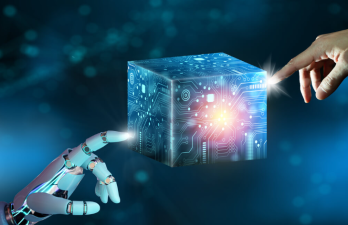
Although AI and Web3 technologies have different origins and foundations, their combination provides new opportunities for decentralized applications.
The Integration of Smart Contracts and AI
Smart contracts are a core application of Web3, enabling the automatic execution of protocols without intermediaries.
Enhancing the Intelligence of DApps:
By introducing AI algorithms, smart contracts can make decisions more intelligently. For example, AI can analyze real-time data to help smart contracts predict market dynamics and automatically adjust contract terms, thereby improving efficiency and flexibility.
Enhancing the Intelligence of DApps:
Decentralized applications (DApps) operate on blockchain technology, possessing decentralization, transparency, and security. The addition of AI can make DApps more intelligent, providing personalized services based on user behavior analysis and even predicting user needs. For example, AI-based recommendation systems can help DApps provide customized functions, improving user experience.
Strengthening Blockchain Security:
Blockchain, with its decentralized and immutable characteristics, guarantees data security. However, blockchain still faces potential security issues, such as smart contract vulnerabilities or cyberattacks. AI can improve blockchain security through real-time monitoring and anomaly detection. For example, AI can analyze transaction patterns, identify suspicious behavior, and proactively prevent security risks.
Decentralized Identity Authentication and Data Privacy:
Web3 emphasizes complete user control over data, while AI can improve the efficiency and accuracy of decentralized identity authentication through biometric technology or behavioral analysis. AI not only enhances the security of identity verification but also provides users with more intelligent data privacy protection, ensuring the security of personal information.
Conclusion
The integration of AI and Web3 is not a simple technological aggregation, but a restructuring of power structures—from centralized monopolies to user empowerment and community collaboration. Despite challenges such as data privacy, computing power bottlenecks, and model transparency, breakthroughs in open-source models, distributed agents, and physical intelligence are painting a more equitable and efficient digital future.
As the light of AI illuminates the decentralized universe of Web3, we stand on the threshold of a new era. This revolution will not only reshape the technological paradigm but also reconstruct how humans interact with the digital world. The future is here; let us embrace this "double helix" revolution with an open mind and jointly write a new chapter in digital civilization.